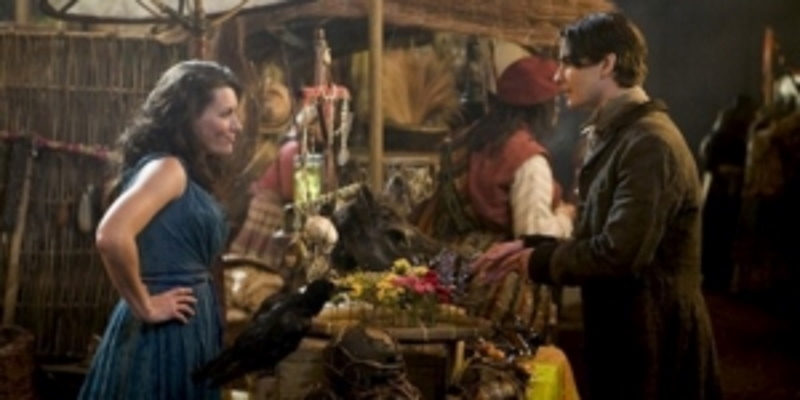
I’ve really enjoyed creating collections of briefly summarized NPCs (see previous entries below!), and today I’m doing merchants. Whether you’re running a shopping session or an investigation in a fantasy version of the Marrakesh Night Market, these might be useful for making the place feel real, lived-in, and just a little strange. (Also, since I read a little bit of the linked Wikipedia article: if the square’s name can validly be translated as “the Mosque at the End of the World,” that is the most hardcore shit ever and I love it. I of course do not read Arabic and can only trust Wikipedia on this.)
Bounty Hunters | Crewmates | Scholars | Dungeon-dwellers | Hirelings | Merchants
Merchants
- Aubrei the Antiquer is an elf who trades in furniture of old and refined styles. Everything in the shop, including the merchant, smells strongly of wood polish. Aubrei knew some of these trees when they were saplings, before humans claimed them for carpentry, and this trade is his way of honoring them.
- Sapwith’s Punctilion sells esoteric goods—crystals, incense, chalk, hourglasses, lavishly decorated knives—for occult or druidic ritual and spell-component purposes. They can of course be used for divine ceremony, but take it from me: you don’t want Sapwith to know about it.
- Chavinec’s Swansong offers musical instruments, sheet music, and lessons by the hour. Beira Chavinec was once a famous performer, but bitter rivalries and a bout of stage fright ruined a rising career, so now they teach and keep a lower profile. They offer enchanted instruments at below-market rates to those who elevate the art in Beira’s opinion.
- Bête & Bêtise buys and sells exotic animals, the more dangerous the better. Even navigating the shop is an exercise in looking without touching. The shop owner, Rast Cospur, hires adventurers that can bring dangerous creatures in alive, but his contracts reduce payment for harm to the animal, and impose harsh penalties if any animal should die in the process.
- Yonder’s Chop is a popular street-food vendor, run by the halflings Yonder and Morrow. From before dawn until nearly midnight, there’s hearty pork, beef, vegetables, and noodles, priced to feed laborers.
- The Dreaming Loom is run by Vincula the Mercer, trading in many different textiles (but particularly expensive ones). Silk, fine muslin, and cashmere are available here, many of them in enchanted or enchantment-ready form; paying Vincula’s 50% upcharge for the materials cuts the time to create enchanted clothing in half.
- The Masterful Sobriquet sells names. To buy a name from them and apply it to oneself is to forever alter the identity. Prices range from the reasonable (10 gold) to the astronomical (“the Chronomancer” sold in exchange for a duchy). The merchant is an ancient tiefling woman who goes by the name Deodate.
- Guil the Glassblower has an impressive range of glass and cut-crystal goods to sell, and through a technique known to him (a goliath) and his stone giant kin, they are extraordinarily more durable than similar goods from other shops.
- Pelling’s Reds is a wine shop that does not, in fact, limit itself to red wines, or even to wine; sherries and ports are also on offer. Pelling is a charming half-elf who dresses exclusively in expensive burgundy clothes. Pelling also has a side-business as a fence, paying the best for stolen wines and liqueurs.
- Skin and Ink is not a tattooist, as many assume from the name, but a dealer in rare books, scrolls, and incunabula. The Iversgar family of dwarves has run this shop for 150 years, making it one of the longest-lasting fixtures of this market. You would be correct to assume that a considerable amount of magic is bought and sold here. If all you can read is Common, this probably isn’t the shop for you.
- Penny Wishing is closed most of the time, but if you happen to walk by and it’s open… well, it may still be closed for everyone but you. It’s run by Mickle, who is something like a goblin-fey or boggart. He sells little wishes, any wish you can fit in a thimble. (Most of the time this means a spell of level 2 or lower.) You name your wish, Mickle packs it into a thimble and seals it with wax, and you open it when the time is right. He has a way of always giving you just a little more than you expected.
- Evina’s Remedies offers cures for every manner of ailment, and Evina is dedicated to letting you know what’s wrong with you and how she thinks that should be corrected. As she has no sense of tact whatsoever, she makes no friends at it, but she can do what she says. Evina is a gnome.
- Madame Cicatrix buys and sells scars. The mark on the flesh also carries the memory of its making. The most popular by far are scars from a lover’s nails; Madame can scarcely keep those in stock. Her agents, mostly half-orcs, trade in stories as a way to find people with the most desirable scars. She charges anywhere from 50 to 5,000 gold pieces, based on rarity.
- The Stone Litany deals in gemstones, raw and cut. The proprietor is Jaelia, a githzerai masquerading as a human. Many of her customers are likewise disguised visitors from places beyond the Prime Material Plane, and indeed the whole business is a cover for the trade in unimaginably precious astral diamonds.
- Maps by Lorast is a clearinghouse for not only maps, but also tales, rumors, and lies of adventures to unusual places. Reputation is everything in the community of buyers and sellers here: if you pay with a map, tale, or rumor that doesn’t balance the scales of what you received, you pay in coin next time. Lorast is a human.
- The Hunter Tawari sells pelts, leather, teeth, horns, and bones, mainly from animals that locals don’t think of as good to eat. Tawari is a female orc, scarred and burned by dragonfire. Earn a little trust and she’ll give you tips on where to find any creature she’s hunted, and how to take them down.
- A Face to Meet is a shop of mascherari. Orelia Dalla is the master over a team of apprentices, each of them eager to win her approval and become journey artisans. Donning one of these masks before sleep is known to influence your dreams.
- The Umberforge is an armorer’s shop, making medium and heavy armors, both plain and decorated. Customers only meet the dwarf and human staff, led by Umber Volstone; in secret, most of the working smiths are azers, brought here through a compact with the Sultan of the City of Brass.
- Dragonfume is a tobacconist’s shop that also has a beautiful array of hand-carved pipes. The owner, Wallace Herrishon, is a genial sort of halfling who misses the adventuring days of his youth. The shop loses money steadily because Wallace often lets customers pay in a tale well-told, but he cleans the tales up and writes them down to publish more profitably.
- Króga’s Armory sells bladed weapons, most of them with a distinctive fey-inspired look. The workers here all claim to have met the real Króga, but each describe a completely different person. Magical weapons are sometimes sold here as well, and each weapon carries an additional cost: the barest drawing of blood from buyer and seller, commingled. The workers claim that it is to remind the buyer of the responsibility of bearing a weapon.
Okay, that’s about what I’ve got. I hope you like them—I never know what’s going to come out when I start writing one of these collections. If you enjoy my writing, consider backing my Patreon. For as little as $1 a month, you get early access to all of this blog’s content!
You can now buy Under the Seas of Vodari in PDF!
Under the Seas of Vodari is a 300-page book that provides 5E/Fifth Edition material for both gamemasters and players to dive into a world full of action and adventure set beneath the waves of Vodari or your own campaign world. This book is a follow-up to The Seas of Vodari, a setting book filled with swashbuckling action and magical adventure. Dive into your first adventure today!
Bête & Bêtise, the Masterful Sobriquet, and Penny Wishing appeared in my game today.
Penny Wishing made a deal with one player who wanted two Truth Potions for five minutes of their time… at a time of Penny’s choosing. Probably during a big fight. Another player wished for a kitten, and paid about 5 gold for it.
I placed the shop inside a wishing well and Penny came out if a character threw a coin in the well.
Deodate bought the deadname from a character who is trans, and then offered to make their current name overwrite the deadname in all memories for a fee. That was paid quite happily.
Bête sold a beastmaster ranger some care equipment and Spiderclimb Boots for their wolf companion.
Thank you for all your works, they’ve been great!
This is one of the best comments I have ever gotten on any blog post. I am so happy that you brought to life something that I wrote and that it meant something to your players!
You are so very, very welcome, and I really appreciate you taking the time to tell me about it.